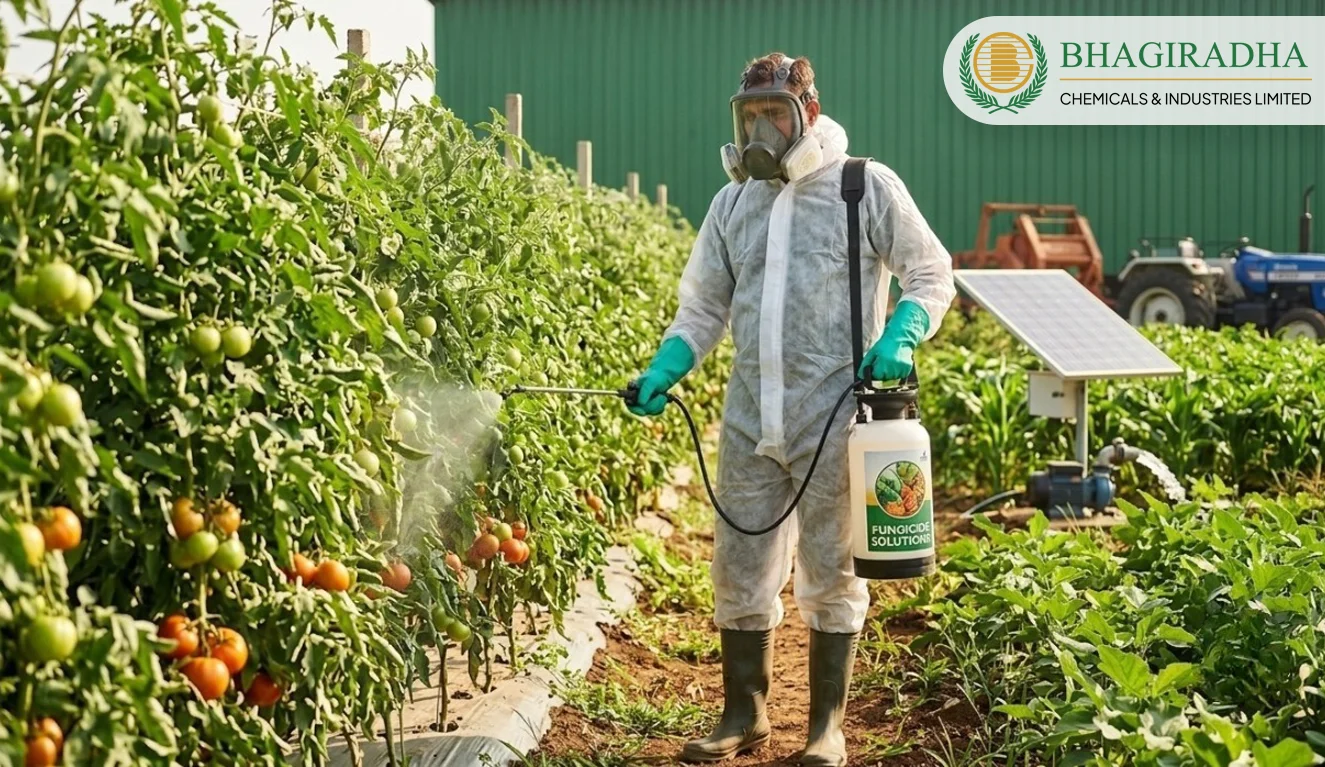


Fungal diseases remain one of the most persistent challenges in agriculture productivity. They affect crop health, reduce yield potential and create pressure on farmers to protect output across changing climatic and field conditions. As these challenges grow more complex, fungicide development can no longer depend only on conventional production capacity.
It needs stronger chemistry, better process control, scalable manufacturing and a responsible approach to long-term agricultural value.
This is where innovation becomes important for fungicide manufacturers. The future of fungicide development is being shaped not only by what is produced, but also by how efficiently, safely and consistently it is manufactured. For companies like Bhagiradha Chemicals & Industries Limited (BCIL), this means combining research-led development with disciplined manufacturing to support dependable crop protection solutions.
Moving from Production to Process Strength
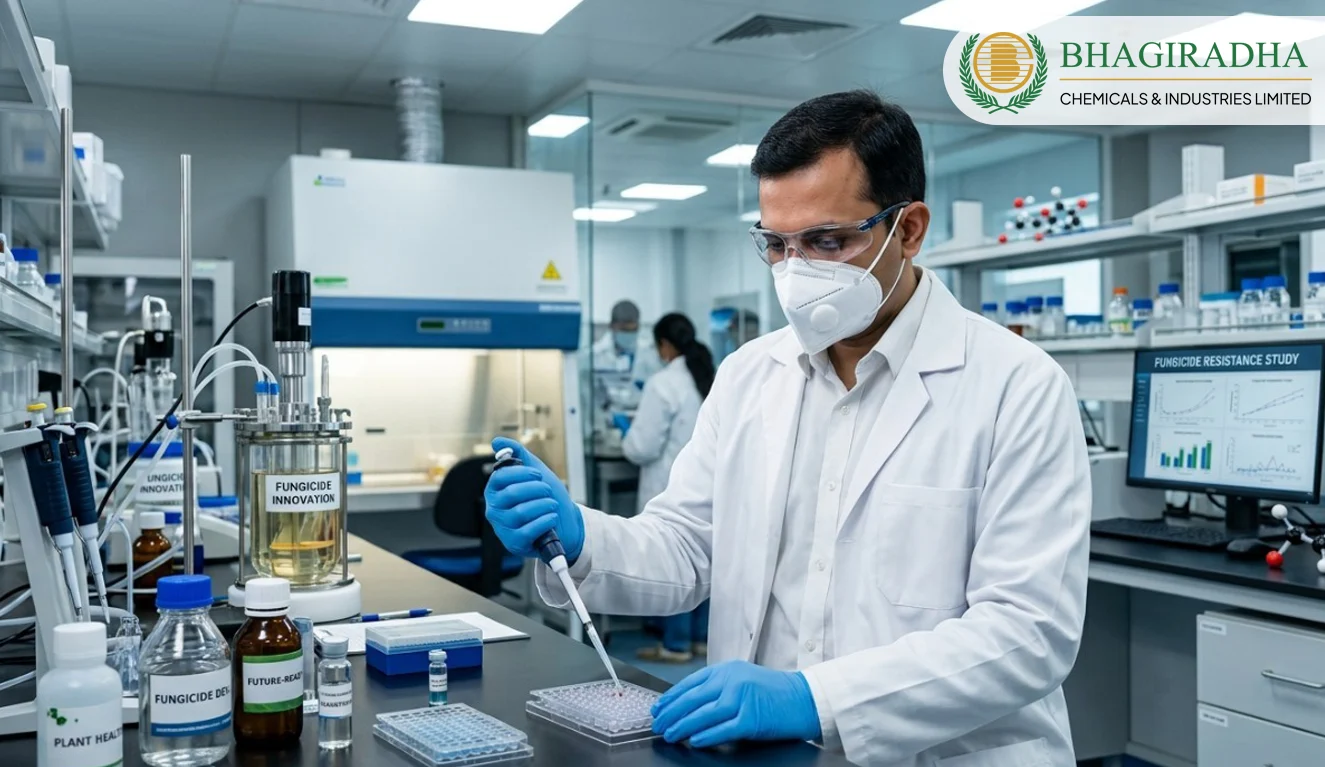
In modern fungicide development, innovation often begins inside the manufacturing process. A stronger process can improve yield, reduce variation, support quality consistency and make scale-up more reliable.
For a manufacturing partner, this is a major advantage. Customers do not simply look for output. They look for confidence: confidence that the product can be manufactured consistently, that quality can be maintained across batches, and that supply can remain dependable over time.
BCIL focus on process chemistry, R&D and scalable manufacturing reflects this shift. By strengthening the route behind the product, the company supports fungicide development that is not only technically sound but also commercially sustainable and practical.
Why Innovation Matters in Fungicide Development
Fungicide development needs continuous improvement because climate conditions and agricultural productivity are never static. Crop disease patterns, market expectations, regulatory requirements and sustainability priorities continue to evolve.
Innovation helps manufacturers respond to these changes through:
- Better process efficiency
- Improved quality consistency
- Cost-effective synthesis
- Safer manufacturing systems
- Scalable production routes
- Stronger regulatory readiness
- Reduced operational risk
For pesticide manufacturers, this kind of innovation is essential. It helps create manufacturing systems that can support both present demand and future growth.
The Role of Advanced Chemistry
Advanced chemistry plays a central role in shaping reliable fungicide development. It helps manufacturers optimise synthesis routes, control impurities at acceptable level, improve process stability and strengthen product consistency.
At BCIL, chemistry is not treated only as a laboratory function. It is connected to manufacturing reliability, cost efficiency and long-term customer confidence. This approach helps create fungicide technicals and intermediates that meet quality expectations while supporting scalable production.
For customers, this makes a meaningful difference. A well-developed process can improve predictability, reduce production uncertainty, support better supply planning, safety to the environment etc…
Sustainability as Part of Innovation
Manufacturing of fungicides must become more efficient, with more conscious of safety, resource use and environmental impact.
This is why Innovation and Sustainability must go together to compliment each other. Innovation improves how products are developed and manufactured. Sustainability ensures that this progress is achieved responsibly.
For BCIL, sustainable manufacturing is connected to safe operations, regulatory compliance, process improvement, resource efficiency and long-term value creation.
Scalable Manufacturing for Future Needs
Fungicide demand can be influenced by seasonal cycles, global market needs, crop patterns and changing disease pressures. Because of this, scale becomes important.
By maintaining quality, process discipline, documentation and to maintain highest safety by means of Good Manufacturing Practices (GMP).
BCIL scalable manufacturing approach supports this need. With strong R&D, process-led development and disciplined operations, the company is positioned to support customers who need reliability across both current and future demand.
Building Long-Term Customer Confidence
In fungicide development, trust is built through repeated performance. Customers value manufacturers who can combine technical expertise with operational discipline.
A strong manufacturing partner must be able to deliver:
- Consistent quality
- Reliable scale-up
- Cost-efficient production
- Safe operations
- Regulatory alignment
- Responsible manufacturing practices
- Long-term supply confidence
This is where BCIL approach becomes relevant. By bringing together scientific rigour, process innovation, safety and sustainability, the company supports fungicide development that is reliable, scalable and aligned with evolving market expectations.
Conclusion
The future of fungicide development will be shaped by manufacturers who can think beyond production. It will belong to companies that can combine advanced chemistry, process innovation, scalable manufacturing, safety and environmental responsibility.
For BCIL, this direction reflects a larger commitment to reliable, cost-efficient and sustainable agrochemical manufacturing. As agriculture continues to face new challenges, the role of pesticide manufacturers will become even more important in supporting dependable crop protection.
By placing Innovation and Sustainability at the centre of fungicide development, BCIL continues to strengthen its contribution to modern agriculture and long-term customer value.
FAQs:
1. Why is innovation important in fungicide development?
Innovation helps improve process efficiency, quality consistency, safety and scalability. It allows manufacturers to respond better to changing crop protection needs and market expectations.
2. How do Fungicide manufacturers support modern agriculture?
Fungicide manufacturers support agriculture by developing and manufacturing solutions that help protect crops from pests, improve crop vigorous and support better yield outcomes.
3. Why is process chemistry important in fungicide manufacturing?
Process chemistry helps improve manufacturing routes, manage impurities, support cost efficiency and maintain consistent quality across production batches.
4. How are Innovation and Sustainability connected in fungicide development?
Innovation improves the way products are developed and manufactured, while sustainability ensures that these improvements are achieved responsibly through safer, more efficient and environmentally conscious operations.
5. What should customers (farmers) look for in pesticide manufacturers?
Customers should look for strong R&D, scalable manufacturing, consistent quality, safety systems, regulatory alignment, cost efficiency and long-term supply reliability.
6. How does scalable manufacturing help fungicide development?
Scalable manufacturing allows companies to meet growing demand while maintaining process control, quality standards, safety and supply consistency.